
Round. Small. Accurate.
High quality micro tensile tests
Direct tensile testing for extremely small material volumes. Reliable determination of strength and ductility from specimen diameters below 1 mm.
Small Material Volume.
Big Uncertainty.
Mechanical characterization at very small dimensions is often based on indirect estimations rather than direct tensile testing.
Typical approaches rely on:
- hardness measurements
- conversion models
- simulation fitting
- empirical correlations
Our Services
Specimen preparation
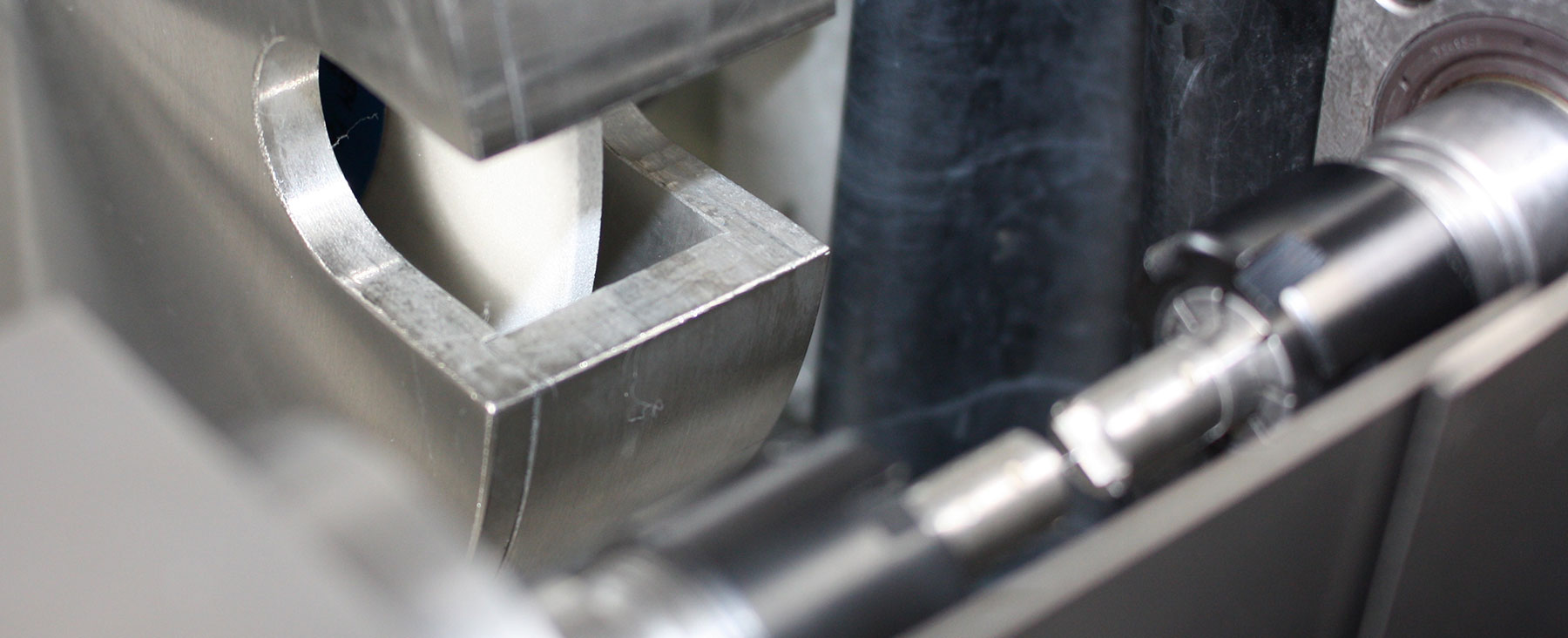
Round micro tensile specimens and custom rotationally symmetric micro-specimens from extremely small material volumes.
Micro tensile testing
Direct determination of strength and ductility using dedicated micro tensile testing systems.

Equipment
Precision systems for specimen fabrication and micro tensile testing.
Scientific Proof
The fabrication and testing methodology was scientifically published in:
ASTM International - Journal of Testing and Evaluation
“Development of a New Testing Procedure for Performing Tensile Tests on Specimens with Sub-Millimetre Dimensions”
DOI: 10.1520/JTE20120175
What Makes Micro Tensile Testing Reliable?
Round specimen geometry
Site-specific specimen extraction
High reproducibility
Low-damage preparation
Optical dimensional verification
Direct tensile properties
Typical Applications
Weld regions
Thin foils and coatings
Additive manufacturing
SPD materials
Medical components
Electronic components
Local microstructural characterization
About microsample

Dr. Georg Rathmayr
Founder
microsample was founded by Dr. Georg Rathmayr based on research in micro- and nanomechanical testing at the University of Leoben.
The technology combines materials science, precision engineering, and practical testing experience for reliable characterization of extremely small material volumes.
FAQs
Can custom specimen geometries be manufactured?
Yes - as long as the specimen remains rotationally symmetric.
Which materials can be tested?
Metals, alloys, welds, coatings, polymers, ceramics, composites, and more.
What specimen sizes are possible?
Typical specimen diameters range from 150-500 μm. Depending on material and application, dimensions from approximately 50 μm up to several millimetres are possible.